VIP's

Alice (Ireod) Lake
Alice Lake born about 1621, Alice Lake was born in England and later living in colonial Boston with her husband, Henry Lake. Her life unfolded during one of the harshest periods of Puritan New England, decades before Salem became infamous. According to her WikiTree biography, Alice was accused of witchcraft after the unexplained illness and death of children connected to the Valentine family in Boston. Colonial fear, superstition, and religious extremism escalated quickly, and Alice was ultimately executed in 1651. What makes her story especially striking is that her case predates the Salem Witch Trials by more than forty years. She was hanged in Dorchester, Mass. for this accusation in 1650. Historians now view many of these earlier accusations as part of the same growing culture of fear and religious suspicion that would later culminate in Salem in 1692. Alice’s surviving children carried on the Lake line despite the tragedy surrounding their mother’s death. Her son, David Lake Sr., appears to have survived the turbulence of mid-17th-century Boston and became part of the wider migration into Rhode Island and surrounding coastal settlements. Many families who had experienced tension with Puritan Boston gradually moved into more religiously tolerant communities such as Rhode Island, Tiverton, and the Dartmouth region. From David came Joel Lake Sr., born in 1683. His WikiTree and ancestry profile places the family firmly in Tiverton, Rhode Island. An area deeply tied to Quaker influence's, coastal farming communities, and maritime culture. By this period, the Lakes were no longer associated with the fear and instability of early Boston but with the expanding agricultural settlements of southern New England. Joel’s son, Caleb Lake, carried the family into the 1700s, a period when colonial New England was becoming increasingly interconnected through trade, migration, and intermarriage. Through Caleb’s daughter, Susanna Lake, the Lake line merged into the Smith family. The family’s movement through Rhode Island and Massachusetts reflects the same broader coastal New England world that later supplied many settlers to Nova Scotia after the Acadian Expulsion. Susanna’s son, Nathan Smith, represents that transitional generation whose descendants increasingly moved northward into Atlantic Canada.
Alice can be seen only in traces and reflections. There is no known record of her from when she still lived. I am still actively reseaerching her. The first the records to show she lived was after she was dead, when the townsmen were trying to figure out what to do with Alice's children since she was dead and her husband had fled. Like most of the women accused of witchcraft, Alice was not well off financially; in today's world, she and her husband would be described as "poor, working class." She was a married woman with at least five children, all presumably fathered by her only known husband, Henry Lake. In 1651, those children would have been a girl about ten, a boy about seven, a boy about five, a child about three who likely was a boy, and an infant. Alice's year of birth is unknown, but because of the ages of her children, she was likely about 30. Like most working class women of the time, she would have worked from sun up till sun down, and likely even after sun down by the light of the hearth fire and by the light of candles she had likely made. She had no conveniences and two little children who would still have been soiling themselves. If she had siblings, parents, or other relatives where she was living, no researcher to date has found them. She carried with her the Puritanical guilt of having had sexual intercourse before marriage, a guilt further complicated because she became pregnant before marriage. Then her youngest baby died. After her baby died, she told people she saw the baby. Maybe she did. Others who have not been judged insane or witches have claimed to see dead people: Look at the Christian religion. Or, maybe she grieved so much that her mind allowed her to imagine that she saw her baby to ease her grief. Or, maybe she knew she did not see her baby, but claimed she did so as to have something to hold onto. As painful as the death of a loved one is, most recognize a mother's loss of her baby as a special loss. In Alice's case, that grief was compounded because -- while she had lost her youngest baby to a death she did not want -- she knew she had attempted to cause death to one of her other children by attempting an abortion. [From the earliest comment about this self-attempted abortion, it appears she did not succeed with the abortion.] The Reverend John Hale had been a young boy when Alice was executed. He went on to graduate from Harvard and became a minister. He supported the witch trials until the witch hunters came after his pregnant wife, the last woman accused of witchcraft in Salem in Nov. 1692. The Rev. Hale wrote the following (about Alice?) in 1697: Another that suffered on that account some time after was a Dorchester Woman. And upon the day of her Execution Mr. Thompson Minister at Brantry, and J.P. her former Master took pains with her to bring her to repentance. And she utterly denyed her guilt of Witchcraft; yet justifyed God for bringing her to that punishment: For she had when a single woman played the harlot, and being with Child used means to destroy the fruit of her body to conceal her sin & shame, and although she did not effect it, yet she was a Murderer in the sight of God for her endeavours, and showed great penitency for that sin; but owned nothing of the crime laid to her charge.
From Entertaining Satan: Witchcraft and the Culture of Early New England, 1982, Oxford University Press: Alice LAKE, convicted and executed at Dorchester in about 1650. Her husband Henry moved away at once; his name appears regularly in the records of Portsmouth, RI, beginning in April 1651. Meanwhile the four LAKE children, all less than ten years old, remained in Dorchester. One, probably the youngest, was ‘bound out’ by the town meeting to a local family for a ‘consideration’ of 26 pounds–and was dead within two years. The other three were also placed in (separate) Dorchester households. At this point their trail becomes badly obscured. (One was living as a servant to an uncle–still in Dorchester–in 1659.) Later, having reached adulthood, the same three were found in Rhode Island–and then in Plymouth Colony, where their father had removed by 1673. It appears, therefore, that the family was eventually reunited, some two decades after the event that had broken it apart.
ALICE (Ireod) POPE LAKE (1620–1651)
│
└── David Lake (1646–1709)
    │
    └── Joel Lake Sr. (1683–1735)
        │
        └── Caleb LAKE (1708–1806)
            │
            └── Lucy Susannah Lake (1747–1825)
                │
                └── Ruth Smith (1791–1845)
                    │
                    └── Lucy Ann Graham (1822–1908)
                        │
                        └── Richard Smith Whidden (1850–1923)
                            │
                            └── Louisa Alden Whidden (1888–1986)
                                │
                                └── Louisa Alden Cochran (1913–2002)
                                    │
                                    └── Prvt. (1947– )
                                        │
                                        └── Prvt.


Sir Richard Edgcumbe
Sir Richard Edgcumbe of Mount Edgcumbe, Cornwall, belonged to one of the most distinguished noble families in the West Country of England. It was exciting when I made this connection, as it took me into the nobility and gentry relm of my research. Like a missing link into a time forgotton. From Richard, I was able to pull out aristocal genealogical charts and go back even further in PLantagenet territory. Noble-family pedigrees are often better documented than ordinary families, but errors still spread widely online. As with the profile image.
Richard Edgcumbe (1499–1562)
│
└── Catherine Edgecumbe (abt.1541–1624)
    │
    └── Elizabeth Champernowne (abt.1564–aft.1603)
        │
        └── Judith Godolphin (abt.1580– )
            │
            └── John Blewett (1620– )
                │
                └── Edward Blewett (1657– )
                    │
                    └── Edward Blewett (1700– )
                        │
                        └── Edward Blewett (1726–bef.1788)
                            │
                            └── Gabriel Blewett (1767– )
                                │
                                └── Gabriel Blewett (1799–1870)
                                    │
                                    └── Emma Blewett Redman (1832–1883)
                                        │
                                        └── Emma Redman Blake (1864– )
                                            │
                                            └── Sidney Guy Blake (–1981)
                                                │
                                                └── Elizabeth Blake
                                                    │
                                                    └── Prvt.
                                                        │
                                                        └── Prvt.
The Edgcumbe family rose to prominence through loyal service to the English Crown, particularly during the turbulent years surrounding the Wars of the Roses and the Tudor dynasty. There are many portraits online of the Edgecumbe family and coat of arms for indivdiuals but There is no confirmed photo so I have put in a photograph showing Mount Edgcumbe House that this Sir Richard Edgcumbe built and expanded during his time.
A gentleman of considerable influence, Sir Richard lived during the early Tudor period and maintained the family’s standing through land ownership, political service, and strategic marriage alliances among England’s gentry and aristocracy. The Edgcumbes were closely associated with Devon and Cornwall and became one of the most respected houses in the southwest of England.
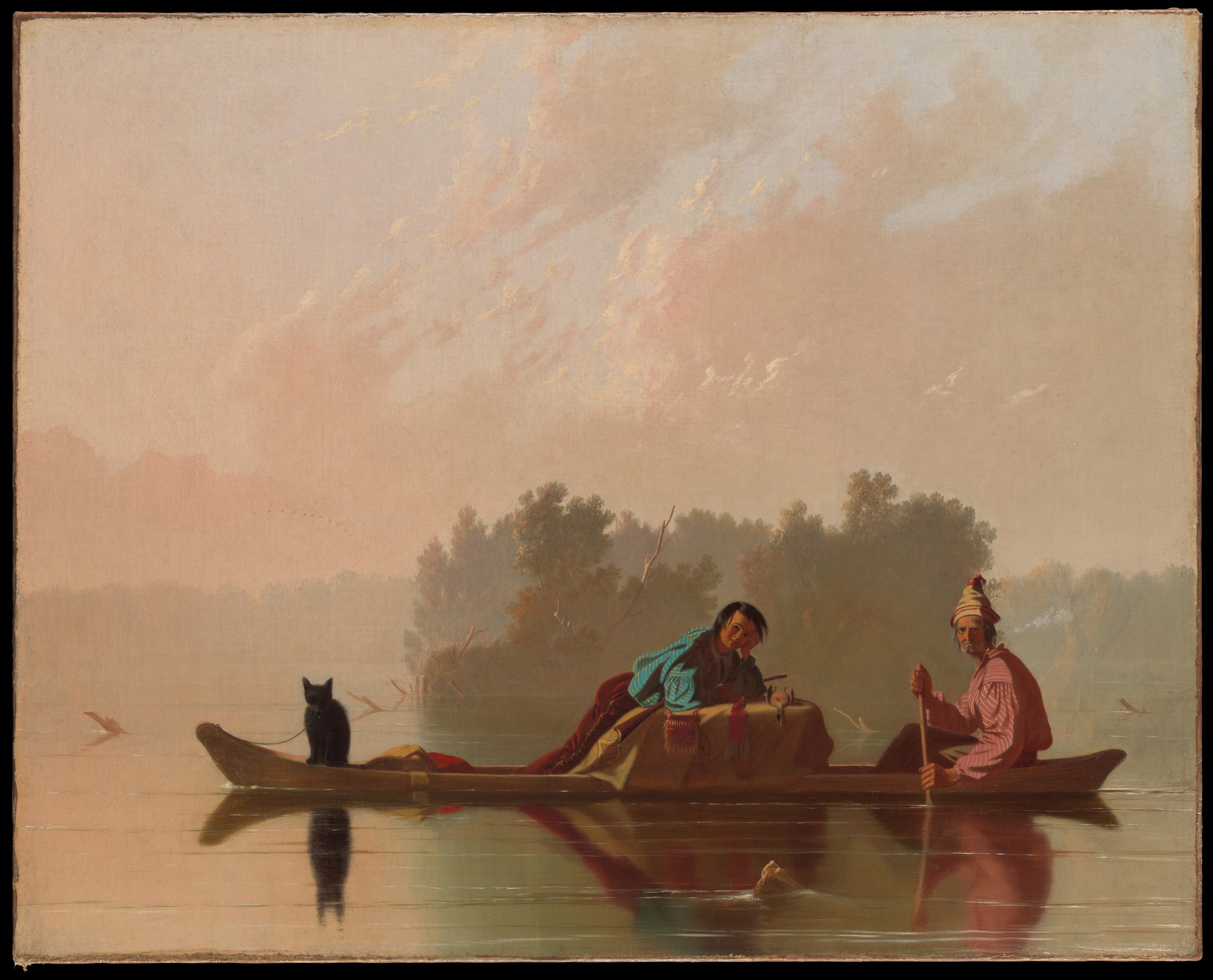
Alexander Henry (The Younger)
Alexander Henry “the Younger” was one of the most influential fur traders of the North West Company during the late eighteenth and early nineteenth centuries. Born in 1765, he was the nephew of the better-known fur trader Alexander Henry “the Elder,” but developed his own reputation as an explorer, trader, diarist, and intermediary between Indigenous nations and the expanding fur trade economy of western Canada. Henry spent much of his life traveling throughout the vast territories surrounding Lake Winnipeg, the Red River, the Saskatchewan district, and the northern plains. His journals remain among the most valuable firsthand historical accounts of the fur trade era and provide detailed descriptions of Métis communities, Indigenous nations, buffalo hunting culture, trading posts, and daily life in Rupert’s Land. Henry lived extensively within Indigenous and Métis communities. Relationships between traders and Indigenous women were common within the fur trade society, and these unions became foundational to many early Métis families in the Red River settlement. Because of this, descendants and associated family lines connected to the Henry name appear repeatedly throughout Red River and Manitoba genealogical history. Some of us modern genealogists continue to debate the precise identity of Julie (Julia) Honoré dit Henry, who is believed by many researchers to have married Jean Baptiste Lépine. Historical confusion stems from multiple generations of Alexander Henrys, inconsistent record keeping, anglicized surnames, and the blending of oral tradition with written documentation. Some evidence suggests Julie may have been connected to Alexander Henry the Younger’s family network, though the exact relationship remains uncertain. Alexander Henry the Younger died tragically in 1814 during a canoe accident near the mouth of the Columbia River while accompanying North West Company operations in the Pacific Northwest. Despite his relatively short life, his journals and family connections became deeply intertwined with the development of the Métis communities of Red River and the Canadian West. Today, Henry occupies an important place not only in Canadian fur trade history, but also in the genealogical histories of many Métis families whose roots trace back to the Red River settlement era.
Gough, Barry M., ed. (1988). The Journal of Alexander Henry the Younger, 1799–1814 (volume I). The Publications of the Champlain Society. p. 15. doi:10.3138/9781442618077. ISBN 978-0-9693425-0-2.
Within this fur trade society, family relationships between European traders and Indigenous women became central to life in the northwest. Through these unions emerged many of the early Métis and francophone prairie families whose descendants later settled Manitoba. Alexander Henry the Younger’s line continued through: Julie Honoré dit Henry, the Lepine family, the Parenteau family, and the Morand family, before eventually connecting into the Lambert family of Manitoba. Generations later, descendants such as Jules Joseph Lambert inherited a family story already deeply connected to the history of the Canadian northwest — a history shaped by the fur trade, Red River settlement, Métis culture, Catholic parish communities, and prairie migration. By the late 1800s and early 1900s, the Lambert family lived in a Manitoba very different from the wilderness Alexander Henry once travelled, yet still profoundly shaped by the same river routes, trade networks, and multicultural frontier society he helped build. In this way, the Lambert family story reflects the larger story of western Canada itself: from fur traders and voyageurs on the Red River, to established prairie communities and modern Manitoba families.
This direct maternal line traces the family connection from Alexander Henry the Younger (1765–1814), a prominent Canadian fur trader and explorer, through the Henry, Lepine, Morand, and Lambert families across six generations to James Michael Lambert. The lineage reflects a blend of Métis, French-Canadian, and early Canadian frontier heritage carried through descendants in Manitoba and western Canada.
Alexander Henry (the Younger) (1765–1814)
│
└── Julie Honore dit Henry (1805–1887)
    │
    └── Jean Baptiste Lepine (1824–1879)
        │
        └── Caroline Lepine (1855–1923)
            │
            └── Marie Dovica Morand (1891–1973)
                │
                └── Jules Peter Joseph Lambert (1912–2000)
                    │
                    └── Prvt.
                        │
                        └── Prvt.

Henry Champernowne
Henry Champernowne was a member of one of Devon’s oldest and most influential landed families during the Tudor period. Born around 1538, he belonged to the ancient Champernowne lineage whose roots stretched deep into medieval England, with strong ties to the gentry and noble houses of Devon and Cornwall. The family held estates across the West Country and played an important role in regional politics, military affairs, and royal service for centuries. Henry lived during a transformative period in English history under the reigns of King Henry VIII, Edward VI, Mary I, and Queen Elizabeth I. England was undergoing religious upheaval, political instability, and rapid social change following the English Reformation. Families such as the Champernownes were deeply involved in these changes, often balancing loyalty to the Crown with the responsibilities of maintaining their estates and local influence. He married into other prominent West Country families, strengthening the network of kinship that connected the leading houses of Devon and Cornwall. Through his daughter, Elizabeth Champernowne, Henry became an ancestor to later generations of the Blewett and Blake families, linking modern descendants to England’s Tudor-era gentry. The Champernowne family itself was historically associated with several important estates, including Modbury, Dartington, and other manorial holdings throughout Devon. Members of the family served as sheriffs, soldiers, Members of Parliament, and royal officials across multiple generations. The surname appears in many surviving Tudor and medieval records, including heraldic visitations, land grants, parish registers, and legal documents. Though relatively little survives specifically about Henry’s personal life, his importance today lies in his place within a documented ancestral chain connecting present-day descendants to the historic families of southwestern England. His era represents the world of Tudor country gentry: landholding families whose influence shaped local governance, inheritance, and social order for generations. Historical Links & Resources The Champernowne Family History (History of Parliament & genealogical references) Visitations of Devon – Heraldic and Genealogical Records The Peerage – Champernowne Family Entries Devon Heritage – Tudor Devon Families FamilySearch Genealogical Records
The Champernownes were connected through marriage to numerous influential families of Tudor England and played a role in the administration and defense of the southwest region. Their social standing and enduring wealth allowed them to remain prominent for centuries within English aristocratic society.
Henry Champernowne (abt. 1538–abt. 1570)
│
└── Elizabeth (Champernowne) Champernon (abt. 1564–aft. 1603)
    │
    └── Judith (Ameredith) Godolphin (abt. 1580– )
        │
        └── John Blewett (1620– )
            │
            └── Edward Blewett (1657– )
                │
                └── Edward Blewett (1700– )
                    │
                    └── Edward Blewett (1726–bef. 1788)
                        │
                        └── Gabriel Blewett (1767– )
                            │
                            └── Gabriel Blewett (1799–1870)
                                │
                                └── Emma (Blewett) Redman (1832–1883)
                                    │
                                    └── Emma (Redman) Blake (1864– )
                                        │
                                        └── Sidney Guy Blake (d. 1981)
                                            │
                                            └── Elizabeth Blake
                                                │
                                                └── [Private]
                                                    │
                                                    └── Prvt.
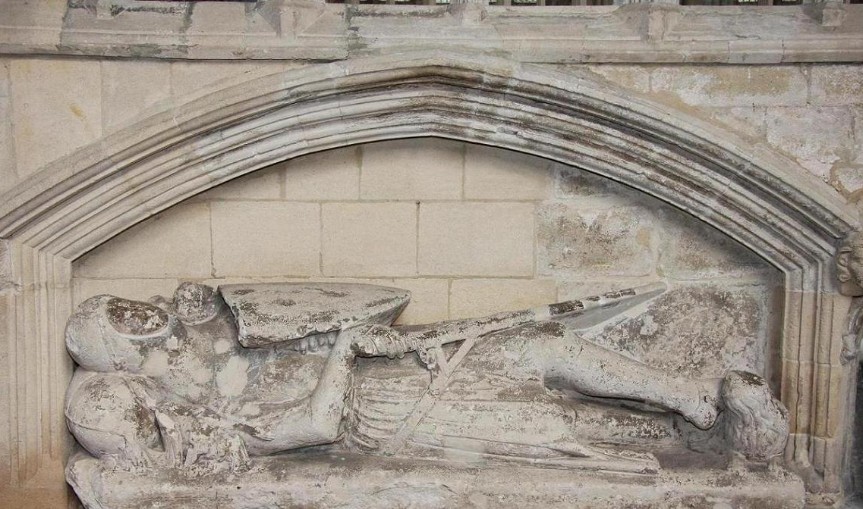
Humphrey de Bohun, Magna Carta Surety Baron
Humphrey de Bohun, 4th Earl of Hereford and Essex, was among the most powerful magnates in medieval England. Descended from a Norman noble family, the de Bohuns held immense estates and hereditary titles, including the prestigious office of Lord High Constable of England.
He played a major role during the reign of King Edward II and became one of the leading barons opposed to royal favoritism and political corruption at court. Humphrey de Bohun participated in several military campaigns and was ultimately killed at the Battle of Boroughbridge in 1322 during the conflict between rebellious barons and the Crown.
Through generations of noble intermarriage, the de Bohun bloodline became woven into many royal and aristocratic families across Britain.

Noble Connections
I have more VIP'S to add to this page as my ancestry with these distinguished individuals reflects a remarkable connection to England’s medieval and Tudor-era nobility. Through centuries of strategic marriage alliances, military service, and landholding, these families became interwoven among the upper ranks of English society. I have decided I am royal. without a Title! Ha. If woman could have been heir's oh how the landscapes of today, may look different.
Families such as the Edgcumbes, Champernownes, and de Bohuns contributed to the political, military, and cultural development of England across multiple centuries. Their descendants carried forward traditions of public service, regional influence, and aristocratic heritage that remain historically significant today.